

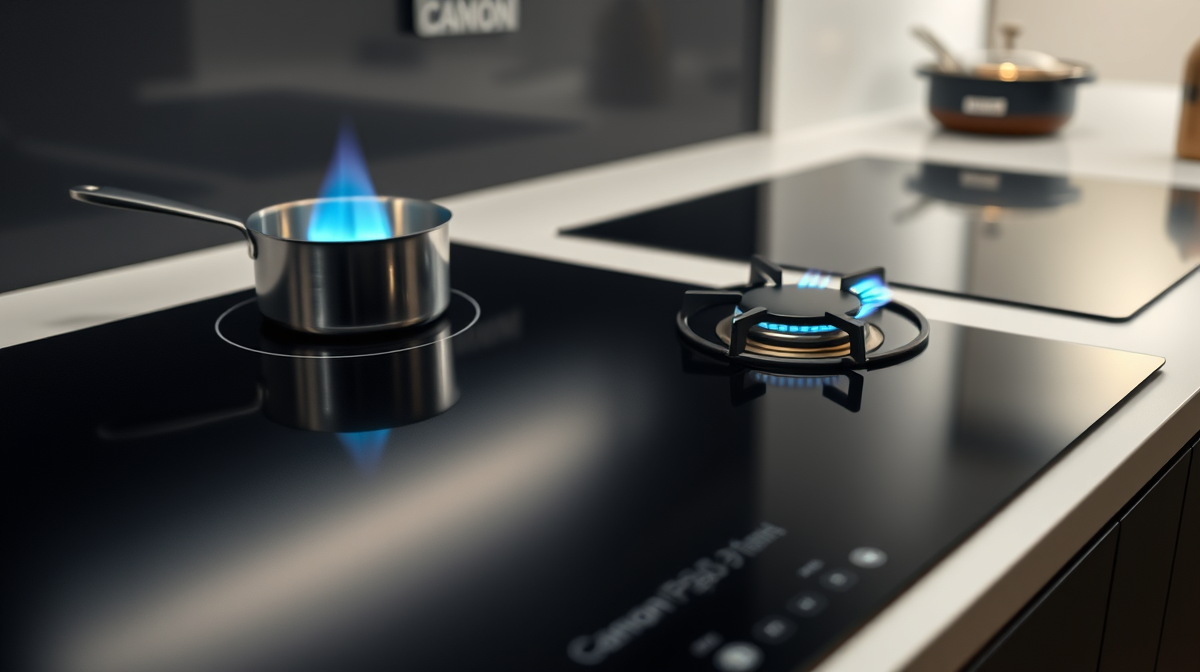
Are you pondering the heart of your home – your kitchen stovetop – and wondering which choice aligns best with a sustainable, energy-efficient lifestyle? Selecting the right cooking appliance goes beyond aesthetics; it impacts your energy bills, indoor air quality, and overall environmental footprint. In this article, we’ll dive deep into induction cooktops, traditional gas, and electric options, analyzing their efficiency, environmental impact, and the crucial factor of indoor air quality to help you make an informed decision for an eco-wise home.
Understanding Your Cooking Powerhouses
Before we compare, let’s briefly introduce the main contenders in your kitchen:
- Traditional Gas Cooktops: These use a direct flame generated by burning natural gas or propane, offering instant heat and visible flame control.
- Electric Coil/Radiant Cooktops: Rely on electricity to heat resistance coils or a glass-ceramic surface that then transfers heat to cookware. They offer a flat surface but can be slower to heat and cool.
- Induction Cooktops: A more advanced electric technology, induction uses electromagnetic fields to directly heat ferromagnetic cookware. The cooktop itself doesn’t get hot, only the pot or pan.
Energy Efficiency and Transfer: Where Does Your Energy Go?
When it comes to putting heat into your food, not all cooktops are created equal. The key metric here is energy transfer efficiency.
Induction: The Efficiency Champion
Induction cooktops are hands down the most energy-efficient choice. Their secret lies in electromagnetic induction. Instead of heating the cooktop and then the pan, the magnetic field directly heats the cookware. This means:
- Minimal Heat Loss: Very little energy escapes into the surrounding kitchen air. Estimates suggest induction cooktops convert around 85-90% of their energy into cooking heat.
- Faster Cooking Times: Direct heating translates to quicker boiling and heating, further reducing overall energy consumption per meal.
Gas: The Visible Flame’s Hidden Cost
While a gas flame provides instant, visible heat, much of that heat disperses into the kitchen air rather than going into your food. Gas cooktops are typically only 30-40% efficient in transferring heat to cookware. This means:
- Significant Energy Waste: More than half of the energy generated is lost as ambient heat, making your kitchen warmer and potentially requiring more air conditioning.
- Fuel Source Considerations: The environmental impact of natural gas production and distribution, including methane leaks, adds to its footprint before it even reaches your kitchen.
Electric Coil/Radiant: Better Than Gas, But Room to Improve
Traditional electric cooktops, whether coil or radiant glass-ceramic, fall in the middle. They are generally 65-70% efficient. Heat is generated by an electric element and then transferred to the cookware. While better than gas, they still lose considerable heat to the surrounding environment as the cooktop surface itself becomes hot.
Understanding these efficiencies can significantly impact your household energy consumption. For those looking to meticulously track and reduce their power usage across the home, a home energy monitor can be an invaluable tool to highlight areas for improvement, including cooking habits.
Indoor Air Quality and Health Impacts
Beyond energy bills, the air you breathe in your kitchen is a critical factor for sustainable and healthy living.
Gas: The Combustion Byproduct Concern
Burning natural gas creates combustion byproducts that can compromise indoor air quality. These include:
- Nitrogen Oxides (NOx): Linked to respiratory issues, particularly for children and individuals with asthma.
- Carbon Monoxide (CO): A colorless, odorless gas that can be deadly in high concentrations.
- Formaldehyde and Particulate Matter: Other irritants that can contribute to poor air quality.
Even with good ventilation, studies increasingly highlight the health risks associated with gas stoves, making robust range hood usage paramount.
Electric and Induction: A Breath of Fresh Air
Neither electric coil/radiant nor induction cooktops produce combustion byproducts. This significantly improves indoor air quality, reducing exposure to harmful gases and particulate matter. While cooking any food can release grease and odors that require ventilation, these electric options remove the inherent air quality concerns of burning fossil fuels indoors.
For an eco-conscious home, prioritizing indoor air quality is as important as energy savings. Switching to an electric or induction cooktop can be a significant step in creating a healthier living environment.
Speed, Control, and the Cooking Experience
Efficiency and air quality are vital, but how do these cooktops perform in daily use?
- Induction: Offers unparalleled speed and precise temperature control. Water boils incredibly fast, and temperature adjustments are instantaneous, much like gas but often even quicker. The ability to simmer at very low, consistent temperatures is a major advantage.
- Gas: Provides instant on/off heat and a visible flame, which many chefs appreciate for visual feedback. Control is good, but often less precise than induction at very low or high settings.
- Electric Coil/Radiant: Slower to heat up and cool down, making precise temperature control more challenging. There’s often a lag between adjusting the dial and seeing a change in cooking temperature.
For those who value both efficiency and a premium cooking experience, induction truly stands out, offering rapid response and fine-tuned control that can elevate your culinary endeavors.
Environmental Footprint: A Holistic View
The overall environmental impact considers not just direct energy use but also the source of that energy and the lifecycle of the appliance.
- Gas: The largest environmental concern is methane leakage from gas extraction, processing, and distribution. Methane is a potent greenhouse gas. While burning natural gas produces less CO2 than coal, it is still a fossil fuel contributing to climate change.
- Electric (Including Induction): The environmental impact largely depends on your electricity source. If your grid relies heavily on fossil fuels, then the “cleanliness” of your electric cooktop is mitigated. However, as grids increasingly integrate renewable energy sources like solar and wind, the environmental benefits of electric cooking amplify significantly. Many homeowners are also opting for residential solar panels, making their electric appliances powered by truly clean energy.
Choosing an electric or induction cooktop is a forward-thinking decision that future-proofs your kitchen as energy grids decarbonize. By making smart choices in kitchen appliances, alongside other smart kitchen tech, you contribute to a more sustainable future.
The Verdict for a Sustainable Kitchen
Considering energy transfer efficiency, indoor air quality, cooking performance, and environmental footprint, induction cooktops emerge as the most sustainable and energy-efficient choice for your kitchen.
While the upfront cost can sometimes be higher than traditional gas or electric options, the long-term savings on energy bills, combined with the significant health benefits from improved indoor air quality and a reduced environmental impact, make induction a truly wise investment for the eco-conscious homeowner. Embrace the future of cooking and make a choice that benefits both your home and the planet.